
MY last article on climate change was published on 31 August, when we were engulfed by thick haze and air quality had deteriorated to very unhealthy levels.
On 4 September 2026, a haze emergency was declared in Serian District, Sarawak, after the Air Pollutant Index (API) exceeded 500. This brought back memories of the severe haze crisis in September 1997, during the exceptionally strong 1997/1998 El Niño, when a similar emergency was declared in Kuching.
The prolonged haze episode, which began in early August and lasted for more than three months, was caused by extensive forest and peatland fires in Kalimantan and southern Sumatra.
Its consequences extended far beyond public health, affecting numerous economic and social sectors.
What we experienced was reminiscent of the severe haze episode in 2015, which coincided with the very strong 2015/2016 El Niño. Similar conditions had also occurred during earlier El Niño episodes.
Beginning in June 2026, much of Indonesia, stretching from east to west, experienced declining rainfall and the onset of prolonged dry conditions associated with the developing 2026/2027 El Niño.
These conditions presented major challenges for Indonesia. The situation became particularly serious in Kalimantan and southern Sumatra, where extensive forest and peatland fires broke out and hundreds of hotspots were detected.
The question is: why does this continue to happen, as though each El Niño episode were an entirely unexpected event?
After all, the development of the 2026/2027 El Niño had already been anticipated several months earlier. Advances in climate science over the past few decades have enabled scientists to monitor and predict El Niño events at least six months in advance. Early indications of the 2026/2027 El Niño had already emerged towards the end of 2025.
Scientific advances have also considerably improved our understanding of how El Niño influences weather and climate across Southeast Asia. We know that El Niño tends to suppress rainfall over large parts of the Maritime Continent, creating conditions conducive to drought, forest and peatland fires, and transboundary haze.
Yet, whenever a major El Niño occurs, forest fires and haze continue to recur. This suggests that, despite our scientific knowledge and forecasting capabilities, we have repeatedly failed to decouple El Niño from the occurrence of forest and peatland fires.
We already have the ASEAN Agreement on Transboundary Haze Pollution, specifically established to address this recurring regional problem. Yet the problem persists. Where, then, are the weaknesses? Are the existing agreements and mechanisms impressive only on paper, but ineffective in practice?
There is no technology capable of preventing or stopping El Niño. It is a naturally occurring phenomenon arising from interactions between the tropical Pacific Ocean and the atmosphere.
However, this does not mean that forest and peatland fires are inevitable consequences of El Niño.
If we are serious about decoupling the two, effective preventive measures must be implemented well before the onset of the dry season, particularly during the June–October period when fire risks are typically elevated in southern Sumatra and Kalimantan.
The need to break this recurring connection between El Niño and forest fires is becoming increasingly urgent, not only because of their immediate consequences but also because of the growing risks associated with global warming.
Scientific studies suggest that continued global warming could increase the frequency of extreme El Niño events, such as those experienced in 1997/1998 and 2015/2016, over the coming decades.
Although uncertainties remain regarding the magnitude of these changes, the possibility of more frequent extreme El Niño events is a serious concern.
Furthermore, climate projections indicate that southern Sumatra and Kalimantan could experience increasingly dry conditions during the June–October period if global warming continues unchecked.
Under high-emissions scenarios, projected reductions in rainfall during these months could approach the magnitude of drying associated with El Niño conditions.
This raises the disturbing possibility that conditions resembling those currently experienced during El Niño could become increasingly common, even in years without El Niño.
If such projections materialise, the conditions conducive to forest and peatland fires could occur much more frequently. The combination of a warmer background climate and a strong El Niño could further intensify these risks.
This is precisely why limiting global warming to 1.5°C above pre-industrial levels remains critically important.
However, the world is already dangerously close to this threshold. In 2024, the warmest year on record at the time, global mean surface temperature reached approximately 1.55°C above the pre-industrial average.
Although exceeding 1.5°C in a single year does not mean that the Paris Agreement’s long-term temperature threshold has been formally breached, it is nevertheless a stark warning of how rapidly the climate is changing.
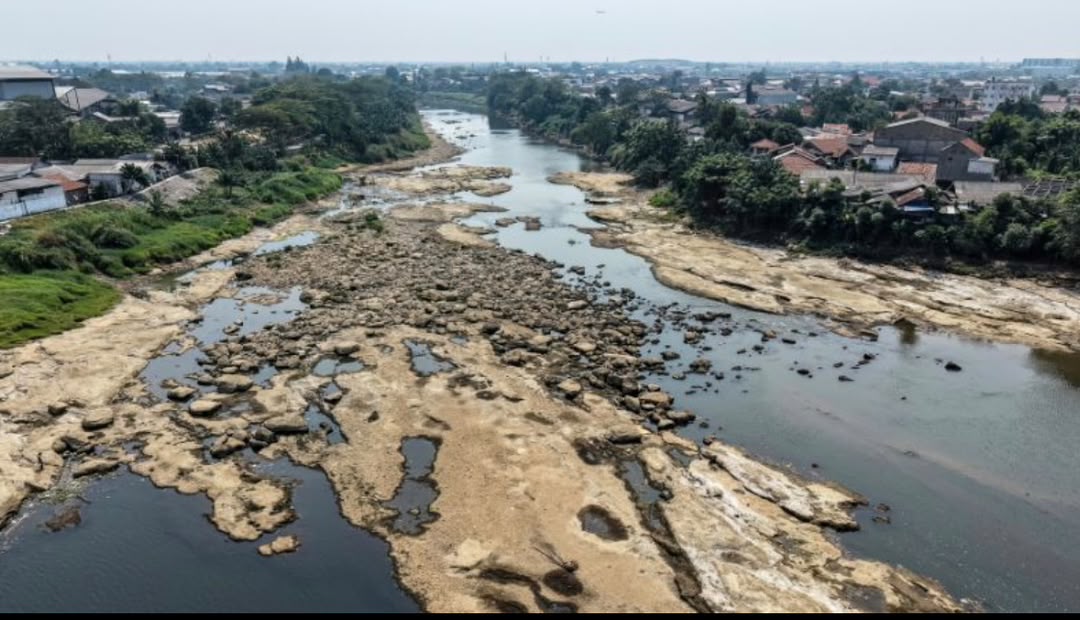
According to assessments by the Intergovernmental Panel on Climate Change (IPCC), limiting global warming to 1.5°C requires rapid, deep and sustained reductions in global greenhouse gas emissions.
Global emissions, currently amounting to approximately 60 gigatonnes of carbon dioxide equivalent (GtCO₂-eq) annually, need to decline substantially by 2030, with global net-zero carbon dioxide emissions reached around the middle of this century.
Achieving reductions on this scale is an enormous challenge, particularly given the very limited time remaining before 2030. These issues are central to negotiations under the United Nations Framework Convention on Climate Change (UNFCCC), including its annual Conference of the Parties (COP).
Unfortunately, progress from one COP to another has often been disappointingly slow, despite increasingly compelling scientific evidence and growing climate risks.
COP31, held in Antalya, Türkiye, concluded on 22 November 2026, two days beyond its scheduled closing date. Despite the extended negotiations, the conference failed to reach consensus on an overarching climate agreement.
A major point of contention was the absence of explicit commitments to transition away from fossil fuels, drawing strong objections from several countries.
The influence of fossil fuel-producing countries remains a major point of contention in these negotiations. Disagreements over the future of fossil fuels continue to complicate efforts to establish a clear and credible pathway towards reducing their use.
As a climatologist, I find these developments deeply troubling. They appear increasingly disconnected from the urgency conveyed by scientific assessments, particularly those of the IPCC.
I often imagine the process of global climate negotiations as turning the knob on a heating appliance.
When the knob is turned in one direction, the heat increases. Turning it in the opposite direction reduces the heat.
Human activities, particularly the continued burning of fossil fuels, have effectively been turning up the Earth’s heating system for more than a century.
Reducing greenhouse gas emissions is therefore equivalent to turning the knob in the opposite direction, slowing the rate at which additional heat accumulates in the climate system.
Yet the slow progress of international climate negotiations raises a fundamental question: are we turning the knob in the wrong direction, or are we simply turning it far too slowly?
If global greenhouse gas emissions remain high, the planet will continue to warm, increasing the risks of extreme weather and climate events. These consequences will be felt across the world, particularly in developing countries, small island states and communities with limited resources to adapt.
For Southeast Asia, the implications are especially serious.
Continued global warming could increase the likelihood of extreme El Niño events and intensify dry-season conditions in fire-prone areas of southern Sumatra and Kalimantan.
This could create increasingly favourable conditions for forest and peatland fires, potentially making severe transboundary haze episodes more frequent and difficult to control.
These are the risks our region may face in the coming decades if the world continues turning the knob in the wrong direction.
El Niño itself cannot be prevented. However, forest and peatland fires, and the transboundary haze they generate, are not inevitable.
We already possess the scientific knowledge, forecasting capabilities and regional agreements needed to anticipate these risks and take preventive action.
What is needed is the political will, effective enforcement and sustained regional cooperation to translate that knowledge into meaningful action.
Ultimately, preventing another haze disaster requires decisive action at both regional and global levels. Regionally, we must ensure that El Niño no longer automatically translates into forest fires and transboundary haze.
Globally, we must accelerate efforts to reduce greenhouse gas emissions and limit further warming.
The world must begin turning the knob in the right direction before the consequences become even more difficult to reverse.
- Emeritus Professor Dr Fredolin Tangang is an Emeritus Professor of Climatology and Climate Change at Universiti Kebangsaan Malaysia, a Fellow of the Academy of Sciences Malaysia, and currently serves at Universiti Brunei Darussalam. He is a former Vice-Chair of Working Group I of the Intergovernmental Panel on Climate Change (IPCC).