
THE year 2025 has drawn to a close, and we have now stepped into January 2026. Many of us may be busy reviewing the targets we set for 2025 while at the same time formulating new resolutions and plans for 2026.
I take this opportunity to share a commentary that seeks to reflect on the climate-related disasters that occurred throughout 2025, as well as what we might reasonably expect in 2026.
The year 2024 was recorded as the hottest year in modern observational history, with the global mean temperature rising by approximately 1.55°C above pre-industrial levels.

More significantly, this marked the first time that the global average temperature increase exceeded the 1.5°C threshold, the central target outlined in the Paris Agreement.
The exceptional temperatures recorded in 2024 were partly influenced by the 2023/2024 El Niño event, which is well known for naturally elevating global temperatures.
In contrast, La Niña typically exerts a slight cooling effect on global temperatures. Consequently, there was an initial expectation that 2025 would not surpass 2024 in terms of global heat records.
Nevertheless, according to the World Meteorological Organization (WMO), 2025 is still projected to rank among the three hottest years ever recorded.
To date, the three hottest years on record are 2024 (1.55°C), 2023 (1.45°C), and 2016 (1.2°C). This means that the final ranking of the three hottest years may be either 2024–2025–2023 or 2024–2023–2025, depending on the final position of 2025.
Official confirmation is expected from the relevant authoritative bodies within the next one to two months.
Although 2025 occurred during a La Niña phase, global temperatures have continued to rise year after year due to global warming driven by increasing concentrations of greenhouse gases.
According to the Intergovernmental Panel on Climate Change (IPCC), the average rate of global temperature increase from 1971 to 2020 was approximately 0.2°C per decade.
The IPCC further emphasises that the current rate of global warming is unprecedented for at least the past 2,000 years. Similarly, global sea-level rise is now occurring at its fastest rate in at least 3,000 years.
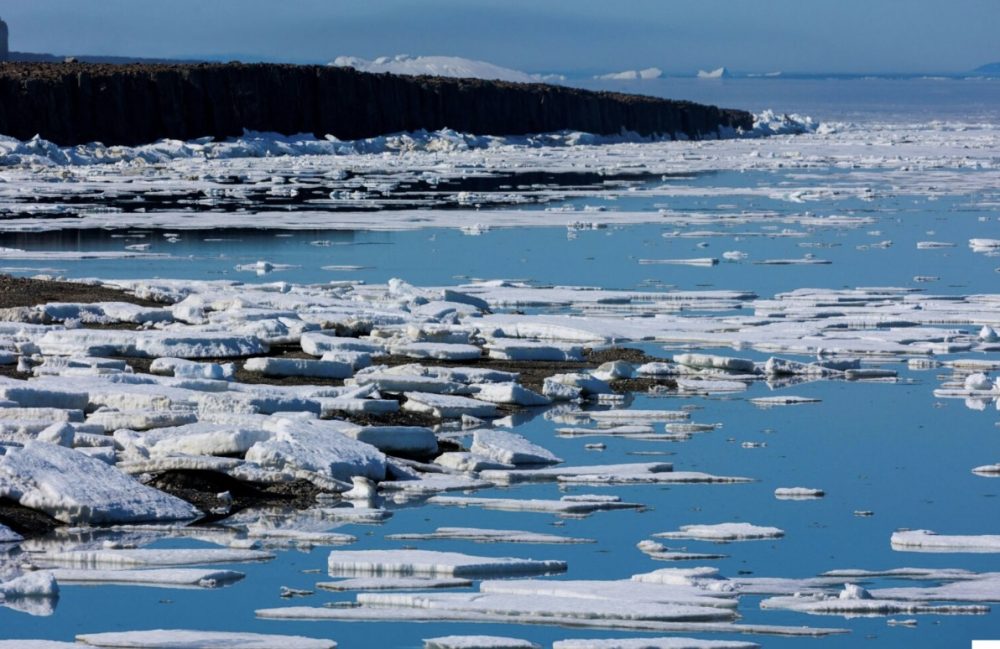
Arctic sea-ice extent has reached its lowest levels in at least 1,000 years, while glacier retreat is the most extensive observed in at least 2,000 years.
These dramatic changes stem from the sharp rise in greenhouse gas concentrations since the onset of the Industrial Revolution in Europe in the early nineteenth century.
Carbon dioxide (CO₂) concentrations have now exceeded 420 parts per million (ppm), far above the approximately 280 ppm recorded during the pre-industrial period.
Indeed, the current concentration of 420 ppm lies well outside the natural range of 180–300 ppm observed over the past million years, based on Antarctic ice-core analyses reported by the IPCC.
IPCC assessments also show that climate models are unable to reproduce the observed global temperature increase since the 1970s when only natural forcings, such as solar variability and volcanic eruptions, are considered.
However, when the effects of rising greenhouse gas concentrations resulting from human activities are taken into account, the observed warming trend can be accurately simulated.
This constitutes some of the strongest scientific evidence that human activities are the primary driver of global warming and climate change.
As a result, we are witnessing an increasing frequency and severity of extreme weather events and climate-related disasters worldwide each year, with escalating impacts on human lives and property.
Heatwaves are becoming more frequent and intense, episodes of heavy rainfall are increasing, areas affected by droughts and wildfires are expanding, and both sea level and ocean temperatures continue to rise.
The year 2025 was no exception. It saw heatwaves and wildfires across Europe and North America, severe flooding in numerous regions, and destructive tropical storms and cyclones.
In Southeast Asia in particular, the region was shaken from mid- to late November 2025 by major floods in Hat Yai (Thailand), across central and eastern Vietnam, and by catastrophic flooding in Sumatra, which claimed more than 1,200 lives.
The emergence of Tropical Cyclone Senyar in the Strait of Malacca subsequently triggered severe flooding in Sumatra.
While multiple weather factors were at play, it is highly likely that elevated sea-surface temperatures in the Strait of Malacca and the South China Sea, driven by global warming, were among the key contributors to the intensification of low-pressure systems that frequently develop in the region.
Since the 1970s, sea-surface temperatures around Southeast Asia have increased by more than 1.0°C. This warming provides sufficient thermal energy to strengthen extreme weather systems, enabling tropical storms such as Senyar to form and cause widespread destruction.
In short, although 2025 may not have been the single hottest year on record, it was unmistakably a year marked by numerous climate-related disasters.
The question now is: what about 2026? With the continuing trend of global warming, 2025 already ranking among the hottest years, and the latest outlook from the United States Climate Prediction Center indicating an almost 50 percent probability of an El Niño event by July 2026, there is a strong likelihood that 2026 could emerge as the hottest year on record, or at least the second hottest.
Such conditions are expected to generate a wide range of extreme weather events. In Malaysia and Indonesia, we may face hotter conditions, more pronounced drought episodes, and an increased risk of haze.
Happy New Year 2026.
Professor Emeritus Dr Fredolin Tangang is Professor Emeritus in climatology and climate change at Universiti Kebangsaan Malaysia, a Fellow of the Academy of Sciences Malaysia, and currently serves at Universiti Brunei Darussalam. He is also a former Vice-Chair of Working Group I of the Intergovernmental Panel on Climate Change (IPCC), United Nations.